 dogracingtips
Updated October 2026
Licensed
 Available in US
Fast payouts
18+ Only
How Graded Racing Works
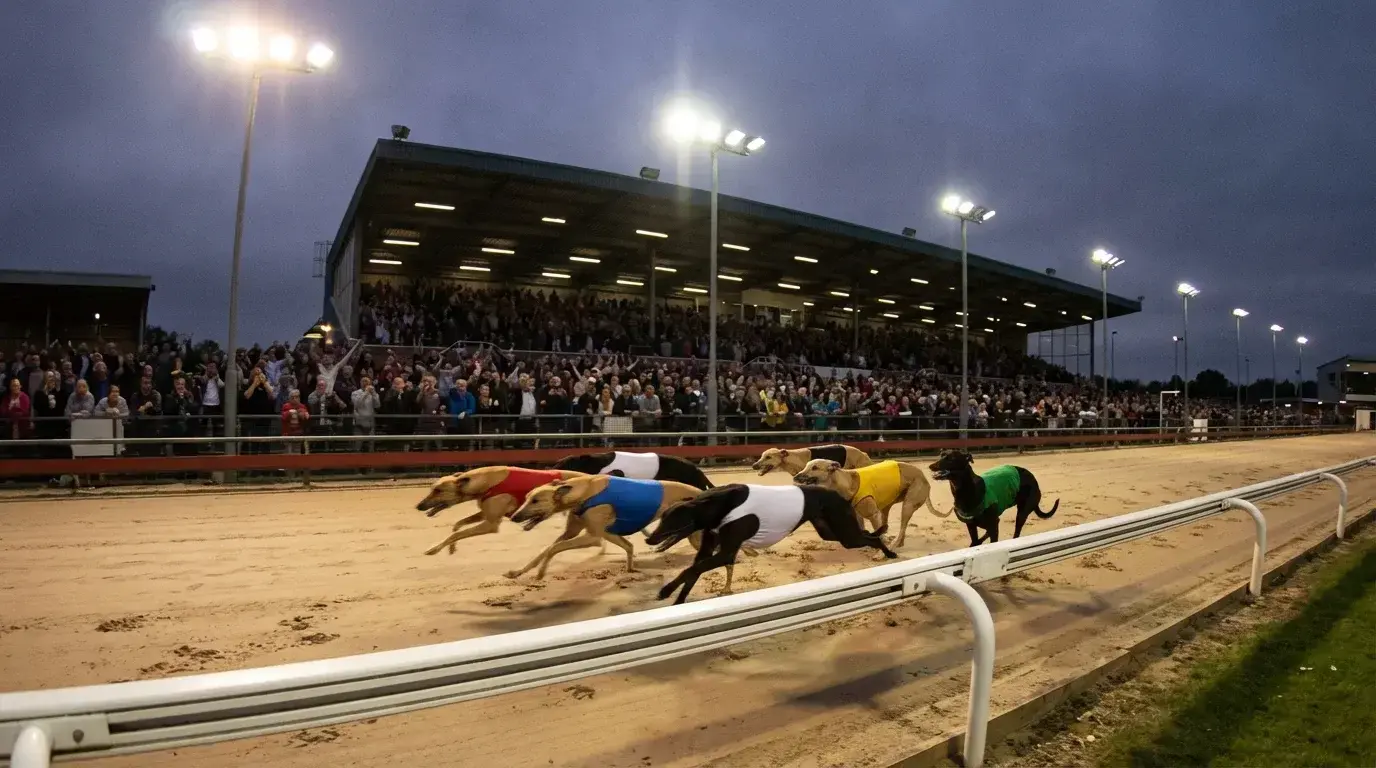
Graded racing is the backbone of the UK greyhound calendar. The vast majority of races held at GBGB-licensed tracks are graded — meaning every dog in the field has been assessed by the racing manager and placed into a classification that reflects its recent performance at that venue. The purpose is competitive balance: dogs of similar ability race against each other, producing fields where any of the six runners has a plausible chance of winning.
The grading system uses a letter-number combination — A1 through to D4, with A representing the fastest dogs and D the slowest. Within each letter, lower numbers indicate faster dogs. The grades are track-specific: a B3 at Romford reflects performance at Romford, not a national standard. Dogs are promoted after strong results and demoted after poor ones, with the racing manager applying a combination of time analysis, finishing positions, and professional judgement to set and adjust grades.
In graded racing, the trap draw is seeded rather than random. The racing manager allocates traps based on each dog’s running style — railers are placed in the lower-numbered traps, wide runners in the higher traps, and middle runners in between. This seeding is designed to reduce interference at the first bend by giving each dog a path that matches its natural inclinations. It doesn’t eliminate trouble entirely — too many railers in a six-dog field will still produce crowding — but it creates a more structured environment than a random draw.
For bettors, graded racing offers a degree of predictability that other race types do not. The dogs are of known ability, the draw reflects their running style, and the grading system provides context for interpreting form. The analytical tools — form figures, sectional times, trap bias data — work most reliably in graded racing because the conditions are standardised and the information flow is consistent.
How Open Racing Works
Open races operate under fundamentally different rules. There are no grade restrictions — any dog can be entered regardless of its classification, which means the fields attract the best available runners. The trap draw is randomised rather than seeded, so a railer might land in trap 6 and a wide runner in trap 1. The result is greyhound racing at its most meritocratic and its most chaotic.
Open races are staged less frequently than graded events and tend to appear on the bigger tracks’ feature nights. Hove’s Thursday-evening card, Monmore’s selected fixtures, and Towcester’s showpiece meetings regularly include open races alongside the graded programme. The English Greyhound Derby, the St Leger, and other major competitions are contested as open races — the highest level of the sport.
The absence of grade restrictions means open-race fields often contain dogs from different tracks, different trainers, and different levels of recent form. A dog graded A1 at Romford might face an A2 from Hove and a B1 from Monmore. Comparing these runners is harder than comparing six dogs that have been racing against each other in the same grade at the same track for weeks. The published grading tells you about each dog’s standing at its home venue, not about how it stacks up against visitors from elsewhere.
The random draw is the other defining feature. Without seeding, the trap allocation contains no information about running style. You must check each dog’s style independently and assess whether the randomised draw has produced a favourable or unfavourable alignment. A railer that happens to draw trap 1 in an open race has had a stroke of luck. The same railer in trap 5 faces the same problems it would in any race — but without the seeding system to prevent it.
Why Favourite Win Rates Differ
Favourite win rates in graded racing are consistently higher than in open racing, and the gap is significant enough to shape your entire betting approach depending on which race type you are looking at.
In graded racing across the GBGB circuit, favourites win at roughly 33 to 38 per cent depending on the track and grade level. The higher the grade, the more predictable the results tend to be — A-grade fields contain dogs that have proven their ability repeatedly, and the form is more reliable. Lower grades are less predictable because the dogs are less consistent, but the seeded draw and competitive balance still produce a favourite that wins more often than any other individual runner in the field.
In open races, the favourite win rate drops. The random draw introduces a structural uncertainty that graded racing avoids: the best dog in the field might be drawn in the worst trap for its running style, and no seeding system exists to prevent it. Additionally, open fields are deeper in quality, meaning the difference between the best and worst runner is smaller than in a graded race. When all six dogs are genuinely talented, predicting which one will win on any given night becomes harder.
The practical implication is that backing favourites in graded racing is a viable, if unspectacular, baseline strategy. In open races, it is less reliable. The favourite still wins more often than any other individual dog, but the conversion rate is lower, the odds are shorter — because the market recognises the quality of the runner — and the expected value of blindly backing favourites erodes. Open-race favourites require stronger supporting evidence before they deserve your money.
This divergence in favourite reliability also affects exotic bets. Forecast and tricast dividends in open races tend to be higher than in equivalent graded fields, because the finishing order is less predictable and longer-priced dogs fill the frame positions more frequently. If you are a forecast or tricast bettor, open races represent both greater risk and greater reward — the dividends are richer, but the strike rate is lower.
Betting Strategy Differences
The strategic toolkit is the same for both race types — form, draw, running style, speed, class — but the emphasis shifts. In graded racing, the seeded draw does much of the positional work for you: dogs are generally well drawn for their style, and the form is directly comparable because the runners have been racing at the same track in similar company. The analytical task is to find the dog with the best combination of current form, draw advantage, and fitness within a field of known quantities.
In open races, the draw analysis becomes more important and more difficult simultaneously. More important because the random draw can produce extreme mismatches between style and trap — and those mismatches create opportunities. More difficult because you cannot rely on the seeding to tell you which dogs are comfortable in their traps. You must assess every runner’s style independently and evaluate the draw from scratch.
Cross-track form comparison is the other skill that open racing demands. When a field contains dogs from three or four different tracks, their raw times and grade designations are not directly comparable. Speed ratings from Timeform or similar services help bridge this gap, but they are not infallible. A dog with a higher speed rating than its rivals may still lose if the draw puts it at a positional disadvantage that the rating does not capture. The best open-race analysis combines ratings with a visual assessment of how the draw and running styles are likely to interact at the first bend.
Staking strategy should also adapt. The higher variance in open races means a single confident bet is riskier than in graded racing. Some bettors reduce their stakes per bet in open races and increase the number of bets — covering multiple outcomes through forecasts and tricasts rather than committing to a single win selection. Others increase their stakes selectively, targeting the occasional open race where a strong dog has lucked into a favourable draw. Both approaches have merit. The wrong approach is to apply the same staking to both race types without acknowledging the difference in predictability.
Know Which Game You’re Playing
Know which game you’re playing. A graded race and an open race may look similar on the racecard — six dogs, six traps, one finishing line — but the dynamics underneath are fundamentally different. Graded racing is structured, seeded, and designed for competitive balance. Open racing is unstructured, randomised, and designed to find the best dog in the field regardless of where it comes from.
The bettor who treats both the same — applying identical methods, identical stakes, identical expectations — is ignoring a distinction that the sport itself considers significant enough to build an entire race classification around. Graded races reward systematic form analysis and draw reading. Open races reward deeper research, cross-track knowledge, and a tolerance for higher variance. Approaching each on its own terms, with a strategy calibrated to its specific characteristics, is one of the simplest ways to improve your greyhound betting results without changing anything else about your process.
Before placing a bet on any greyhound race, check whether it is graded or open. That single piece of information — available on every racecard — tells you which analytical framework to apply, how much weight to give the draw, how reliable the favourite is likely to be, and how to size your stake. It takes two seconds to check. The difference it makes to the quality of your decisions is worth considerably more than that.
