 dogracingtips
Updated October 2026
Licensed
 Available in US
Fast payouts
18+ Only
How Weight Is Recorded
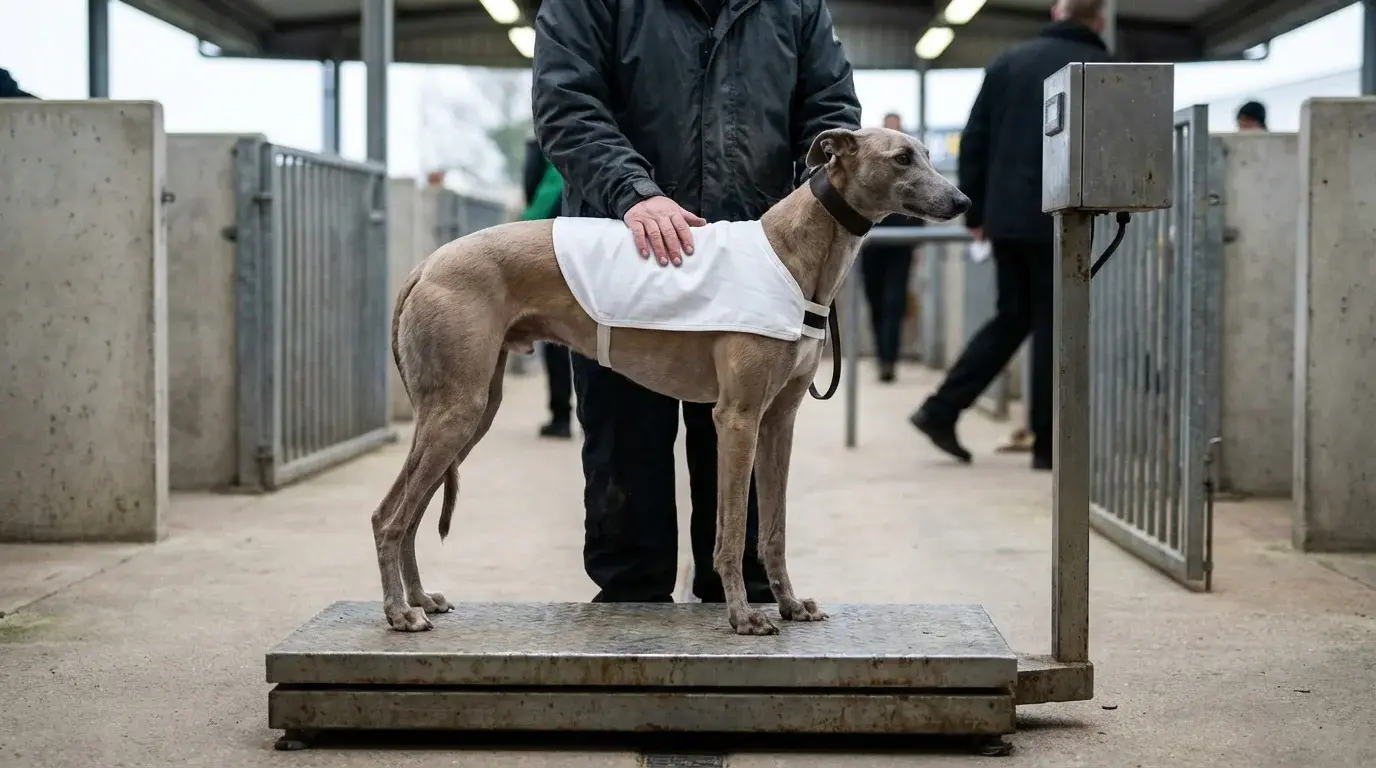
Every greyhound is weighed before it races. The weight, recorded in kilograms to one decimal place, appears on the racecard alongside the dog’s name, form figures, and trap number. It is one of the most visible data points available — and one of the most routinely ignored by bettors who focus exclusively on form and draw.
The weigh-in takes place at the track on race day, typically in the paddock area before the meeting begins. The figure published on the racecard reflects the dog’s weight at that moment, not a historical average or a trainer-submitted estimate. It is an objective, independently verified measurement — the track’s scales, the track’s staff, the track’s record. There is no scope for fudging the number.
Racecards from the Racing Post, Timeform, and most bookmaker platforms display both the current weight and the weight at the dog’s previous run. Some expanded racecards show weights across the last several outings, giving you a trend line rather than a single snapshot. This trend information is where weight data becomes genuinely useful. A single weight figure tells you how heavy the dog is tonight. A sequence of figures tells you whether the dog is gaining, losing, or holding steady — and each of those trajectories carries a different implication for performance.
Greyhound racing weights are considerably smaller and more sensitive than horse racing weights. A typical racing greyhound weighs between 26 and 36 kilograms, and a fluctuation of half a kilogram — roughly one to two per cent of body weight — can be significant. In a sport decided by fractions of a length, a dog carrying even slightly more or less than its ideal racing weight may not perform to its capability.
What Weight Fluctuations Mean
A weight change of 0.5 kilograms or more between consecutive races warrants attention. Smaller fluctuations — a tenth or two — are normal and reflect minor variations in hydration, feeding timing, and the dog’s natural metabolic cycle. Half a kilo or more is a different matter. It signals a genuine shift in the dog’s physical state, and the direction of that shift carries information.
Weight gain in a greyhound can indicate several things. If the dog has been rested between runs, it may have put on weight during the layoff — a natural consequence of reduced exercise and continued feeding. A dog returning from a two-week break half a kilo heavier than its last run is common and not necessarily concerning, though it does suggest the dog may need a race to sharpen up. If the weight gain occurs between races that are only four or five days apart, it is more unusual and may indicate an underlying issue: the dog is not burning energy at its normal rate, which could reflect a dip in fitness or a change in the training routine.
Weight loss is often seen as a positive indicator, provided it is modest. A dog that comes in lighter than its previous run — by 0.3 to 0.5 kilograms — may simply be fitter, leaner, and sharper. Trainers sometimes deliberately bring a dog’s weight down by adjusting its diet and exercise before a target race. However, significant weight loss — a full kilogram or more — can signal health problems, stress, or overtraining. A dog that is losing weight rapidly and consistently is not in a good place physically, and its racing performance will reflect that.
The context matters as much as the number. A dog that always races at 31.2 kilograms and suddenly appears at 30.4 is worth flagging. A dog whose weight has gradually crept from 30.8 to 31.5 over four races is telling a different story — one of incremental change rather than sudden shift. Both are informative. Neither should be read in isolation from the rest of the racecard.
Physical Condition and Visual Cues
Weight is an objective number, but condition is a subjective assessment — and the two do not always agree. A dog can weigh the same as it did three weeks ago and look completely different in the paddock. Coat quality, muscle tone, alertness, and general demeanour are all indicators of condition that the scales cannot capture.
If you are watching at the track or via a live stream that includes paddock coverage, look for specific cues. A dog with a glossy, tight coat is typically in good health and fitness. A dull, loose coat can indicate stress, illness, or poor nutrition. Muscle definition — visible across the hindquarters and shoulders — suggests a dog in peak physical condition. A dog that looks flat or lacks definition may be between peak fitness periods.
Behaviour in the paddock is another signal. A greyhound that is alert, responsive to its handler, and eager to move is mentally engaged. One that appears listless, reluctant to walk, or agitated may be off its game. These are not precise measurements, and interpreting them requires experience — some dogs are naturally calm in the paddock and explosive on the track, while others appear keen but fail to perform. Over time, watching the same dogs across multiple appearances gives you a baseline against which to judge whether tonight’s presentation is normal or unusual.
For bettors who rely exclusively on online racecards and do not watch live, weight is the only condition-related data point available. It is an imperfect proxy for physical readiness, but it is a real one. A dog whose weight is stable and in line with its best recent runs is more likely to be fit and ready than one whose weight has shifted significantly in either direction. When you cannot see the dog, let the scales speak for it.
Weight Trends as Form Indicators
The most useful application of weight data is not a single reading but a trend across several races. When you look at a dog’s weight over its last four to six outings and plot it against its finishing positions, patterns emerge.
The classic positive pattern is a dog whose weight has been stable — within 0.2 kilograms — across its best recent runs. That consistency suggests the trainer has the dog in a settled routine, the diet is right, and the physical condition is being maintained at a level that supports competitive racing. Stability at the right weight is one of the quieter indicators of a dog in good form, and it often aligns with strong performances on the track.
The classic negative pattern is a dog whose weight is drifting upward over consecutive outings while its form is deteriorating. Form of 2-3-4-5 alongside weights of 31.0, 31.3, 31.5, 31.8 paints a clear picture: the dog is losing sharpness as it gains weight. Whether the cause is overfeeding, reduced training intensity, or a natural decline in fitness, the trajectory is unfavourable. Backing a dog in this pattern requires strong evidence from other factors — draw, class drop, sole-seeded running style — to override the warning the scales are giving you.
A less obvious but valuable pattern is the dog whose weight drops slightly before a big performance. Trainers who target specific races — a feature event, a return to a preferred track, a drop in grade — often trim a dog’s weight by half a kilo or so in preparation. If you see a modest weight reduction combined with a grade drop and a favourable draw, the alignment suggests deliberate preparation for a winning performance. The trainer is aiming the dog at this race, and the weight is part of that targeting.
The Scales Don’t Bluff
The scales don’t bluff. Unlike form figures, which can be distorted by trouble in running, bad draws, and the unpredictable behaviour of five other dogs, weight is a clean data point. It is measured independently, recorded precisely, and published without editorial. What the dog weighs tonight is what the dog weighs tonight. No excuses, no interpretation required.
Weight analysis will never be the primary factor in your greyhound betting decisions. Form, draw, running style, and class will always carry more weight — figuratively speaking — in separating contenders from the field. But weight adds a layer of physical evidence that the other factors do not provide. It tells you something about the dog’s body, not just its racing record. And in a sport where a fraction of a second separates first from fourth, the physical margins matter.
Make it a habit. When you study a racecard, glance at the weights. Compare tonight’s figure against the last run. If the number has moved significantly, ask why. If the trend is upward and the form is downward, note the correlation. If the weight is stable and the form is strong, take confidence from it. It takes ten seconds per dog — a minute for the full field — and it gives you information that most of your competition does not bother to check.
