 dogracingtips
Updated October 2026
Licensed
 Available in US
Fast payouts
18+ Only
Each Way Mechanics in Six-Runner Races
An each way bet is two bets in one: a win bet and a place bet, at equal stakes. If your dog wins, both parts pay out — the win portion at full odds and the place portion at a fraction of those odds. If your dog finishes in a place position but doesn’t win, the win part loses and only the place part returns. If the dog finishes outside the places, you lose both stakes.
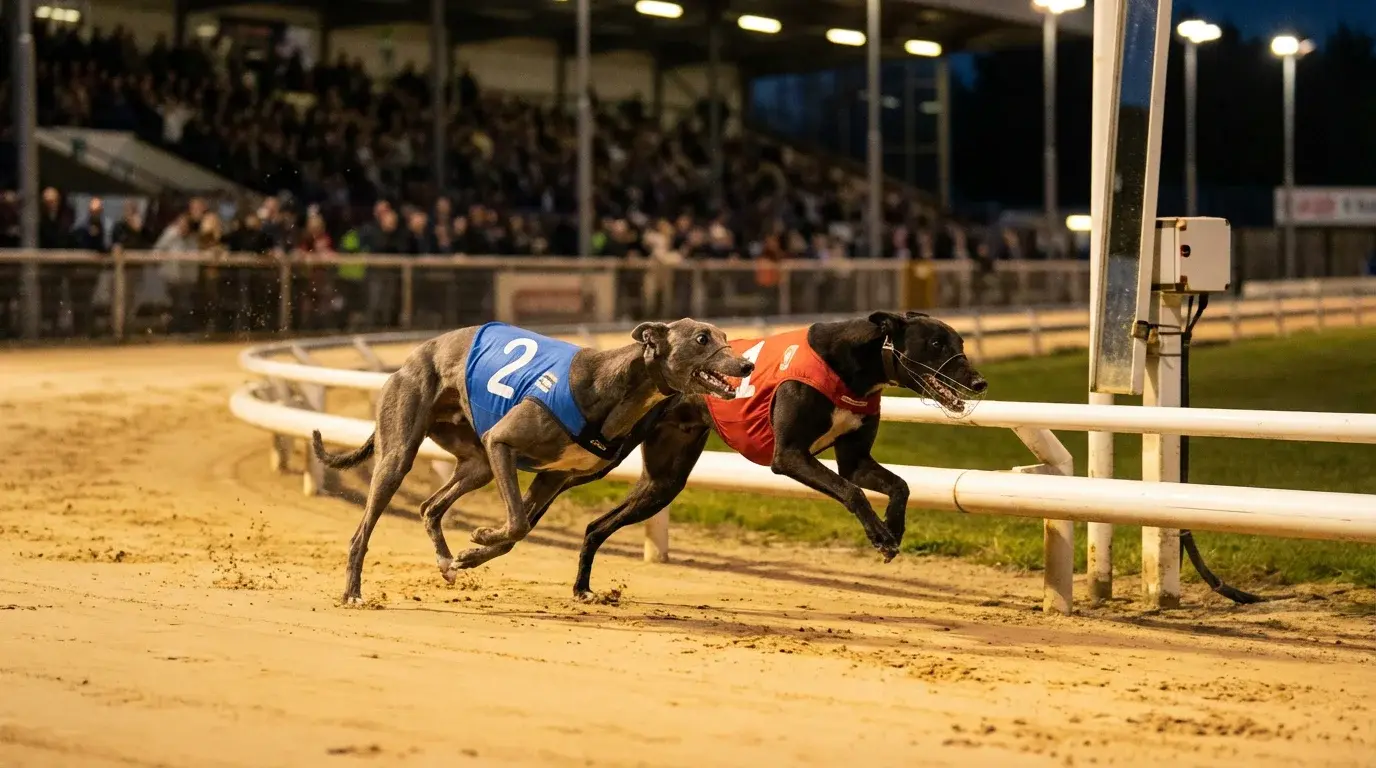
In greyhound racing, where the standard field size is six runners, each way terms are tighter than in most horse racing. The place terms offered by UK bookmakers on six-runner greyhound races are typically one-quarter of the win odds for the first two places. That means only two dogs out of six qualify for a place payout — the winner and the runner-up. There is no third-place payout. This is a significant restriction that many bettors overlook when they default to each way betting on every race.
The double-stake structure is the element that catches inexperienced punters. A five-pound each way bet costs ten pounds — five on the win and five on the place. If the dog finishes second at 6/1, you lose the five-pound win stake and collect the place return: five pounds at one-quarter of 6/1, which is 6/4, returning twelve pounds fifty including the returned stake. Your net position on a ten-pound total outlay is a profit of two pounds fifty. Not a loss, but not the windfall many expect from backing a 6/1 shot.
Understanding this arithmetic before placing the bet is essential. Each way on greyhounds is not a safety net — it is a specific bet type with specific economics, and those economics are shaped by the small field size and the narrow place terms. Used correctly, it can protect your position on a strong selection. Used blindly, it dilutes your returns.
Place Terms and Quarter-Odds Maths
The standard place terms for six-runner greyhound races with UK bookmakers are quarter odds, first and second. That means if your dog’s win price is 8/1, the place price is one-quarter of that: 2/1. At 4/1, the place pays evens. At 10/1, the place pays 5/2. The relationship is fixed and mechanical — no negotiation, no variation between races. Some bookmakers occasionally offer enhanced place terms as a promotional offer, but the default across the industry is quarter odds for two places.
The maths determines whether each way betting makes sense on any given selection. Consider a dog priced at 3/1 each way. The win part pays 3/1. The place part pays three-quarters of one, which is 3/4. If the dog wins, your total return on a one-pound each way bet — costing two pounds — is the win return of four pounds plus the place return of one pound seventy-five, totalling five pounds seventy-five. Profit: three pounds seventy-five. If it finishes second, you lose the one-pound win stake and collect one pound seventy-five from the place part. Profit: minus twenty-five pence. You have actually lost money backing a placed runner at 3/1 each way.
This breakeven threshold is the critical number. At quarter odds for two places, the minimum win price at which an each way bet returns a profit on a place-only result is approximately 5/1. Below that, a dog that finishes second without winning generates either a loss or a negligible gain on the each way bet. At 4/1, you break roughly even on a place. At 3/1 or shorter, you lose money. The shorter the price, the worse the each way proposition on a place-only outcome.
This is not to say you should never bet each way at odds below 5/1. If you genuinely believe a dog will win but want marginal protection, the small place return softens the blow of a second-place finish. But you should go in with open eyes: at prices below 5/1, the each way bet is really a win bet with a minor insurance policy, not a bet that generates meaningful returns from a place.
When Each Way Beats Win-Only
Each way betting earns its keep when three conditions align: the dog has a genuine winning chance, the price is 5/1 or longer, and the form suggests a high probability of finishing in the first two even if it doesn’t win. That profile — the competitive outsider with strong placing form — is where the each way structure actually works in your favour.
The classic each way candidate in greyhound racing is a dog whose form reads something like 2-3-1-2-2-3. It finishes in the top three with regularity but doesn’t always win. At 6/1 or 7/1, the each way bet gives you a meaningful return if it places — 6/4 or 7/4 on the place portion — while the win part offers a substantial payout if the dog gets to the front. You are betting on consistency as much as ability, and the odds reflect a market that may be undervaluing the dog’s reliability because it hasn’t won recently.
Another strong each way scenario is the class-dropper. A dog returning to a lower grade after struggling in faster company often carries a longer price than its ability warrants. The market remembers the recent losses without fully accounting for the softer opposition. If the dog’s early form at the lower grade was competitive — several seconds and thirds before the promotion — an each way bet captures both the potential value of a win and the likely safety of a place.
Races with two clear front-runners and an open scrap for second also suit each way betting on the less fancied of the two leaders. If the market prices one dog at 2/1 and another at 5/1, and both have early speed and good draws, the 5/1 shot each way gives you a profitable outcome whether it wins or just fills the runner-up spot behind its rival.
When to Avoid Each Way on Greyhounds
The most common mistake in greyhound each way betting is applying it to short-priced favourites. A dog at 2/1 each way costs two units and returns a place payout of just half a unit profit if it finishes second. You are risking two to gain half. The maths is unfavourable, and the place terms make it worse — only two places from six runners means there is still a significant chance of losing both stakes entirely even on a well-fancied dog.
Avoid each way in races where you have a strong conviction about the winner but no view on the rest of the field. If your analysis says one dog will win clearly, a win-only bet at full stake delivers a bigger return than splitting the same money across win and place. The each way structure dilutes the win payout by diverting half your stake to a place bet that only pays a fraction of the odds. When conviction is high, commit to the win.
Races with dominant favourites are also poor each way territory. When one dog is odds-on and expected to win comfortably, the second place becomes a contest among five dogs at relatively even odds. Betting each way on any of those five requires the dog to beat four rivals for the runner-up spot — a one-in-five proposition that is rarely priced generously enough to justify the double stake. If the favourite is that strong, the better approach is either to leave the race alone or use a forecast with the favourite in first.
Each Way Is a Tool, Not a Default
Each way betting is a tool, not a default setting. Treating every bet as each way regardless of price, form, and field structure is one of the surest ways to erode a greyhound betting bankroll. The quarter-odds, two-places terms on six-runner fields are the tightest in mainstream UK betting, and they demand selectivity.
The disciplined approach is to assess each selection on its merits and choose the bet type that matches your view of the race. Strong conviction on a single winner at a short price — bet win-only. A competitive outsider with reliable placing form at 5/1 or above — bet each way. A race where you can identify the top two — consider a forecast instead. Each bet type exists because it suits a specific situation, and part of becoming a better greyhound bettor is matching the right structure to the right race.
When you do bet each way, know your numbers. Know the breakeven price. Know what a place-only return looks like at the quoted odds. And know that in a six-runner race, finishing second is not easy — it requires beating four other dogs, often in a first-bend scramble that is anything but predictable. Each way protects you, but only to a point. Beyond that point, it is your analysis that determines whether the bet was worth placing at all.
