 dogracingtips
Best Greyhound Betting Sites – Bet on Greyhounds in 2026
Loading...
What BAGS Racing Is
BAGS stands for Bookmakers’ Afternoon Greyhound Service, and it is exactly what the name suggests — a programme of daytime greyhound meetings staged specifically to provide betting shop and online content during the afternoon. While evening meetings at the bigger tracks attract the largest crowds and the strongest fields, BAGS racing fills the gap between the morning and the first evening fixture, giving bettors a continuous supply of races to study and wager on throughout the day.
The service dates back to the era when high-street betting shops needed live content to keep customers engaged. Horse racing finishes by late afternoon on most days, and the first evening greyhound meeting might not start until seven o’clock. BAGS racing exists to cover that window. It typically begins around late morning and runs through the afternoon, with meetings staged at tracks across the UK on a rotating schedule. The coverage is broadcast into betting shops and streamed online by SIS and The Racing Partnership (TRP), and is available through the major bookmakers.
For the GBGB tracks that host BAGS fixtures, the afternoon meetings are a significant revenue stream. The prize money is generally lower than at evening meetings, the crowds are smaller — often nonexistent in person — and the racing is lower-profile. But the betting turnover, channelled through bookmaker shops and websites, is substantial. BAGS racing is a commercial product designed for the betting market, and its structure reflects that purpose.
From a bettor’s perspective, BAGS racing offers volume: more races, more frequently, across more tracks than the evening schedule alone. That volume creates opportunities, but it also demands a different approach to the one you might use for a marquee Saturday-evening card at Hove or Monmore.
BAGS Schedule and Tracks
BAGS meetings run on most days of the week, with multiple tracks hosting fixtures simultaneously during the afternoon window. The exact schedule rotates and changes between seasons, but you can typically expect two to four BAGS meetings running concurrently on any given weekday afternoon, with occasional additional fixtures on weekends.
The tracks that host BAGS fixtures span the UK circuit. Romford, Swindon, Central Park, Kinsley, and several others all contribute to the BAGS schedule at various points throughout the year. Some tracks host BAGS meetings several times a week; others appear on the afternoon schedule less frequently. The GBGB’s fixture list, published in advance, confirms which tracks are racing on which days.
Race intervals on BAGS cards are typically tighter than evening meetings — races are often spaced at ten- or twelve-minute intervals, compared to fifteen or twenty minutes on evening cards. This compressed schedule means a twelve-race BAGS card can be completed in under two and a half hours. The pace suits the betting-shop environment, where speed and turnover are priorities, but it can feel relentless for a bettor trying to analyse each race thoroughly before the off.
Fixture information, racecards, and results for BAGS meetings are available through all the usual channels: the Racing Post, Timeform, bookmaker websites, and the GBGB’s own listings. The racecard format is identical to evening meetings — you get the same form figures, trap draws, running styles, and grading information. The difference is in the context surrounding the race, not the data you use to analyse it.
How BAGS Differs from Evening Cards
The most significant difference between BAGS and evening racing is the quality of the fields. Evening meetings, particularly at the larger tracks, attract the strongest dogs: higher grades, open races, feature events, and the best entries from the leading kennels. BAGS meetings tend to feature lower-grade racing — A6, A7, and A8 grades are common — with dogs that are not competitive enough for the faster evening cards, dogs early in their careers still finding their level, and dogs returning from breaks being eased back into regular competition.
This is not a criticism of BAGS racing. It is a description of its function. Lower-grade racing is not inherently less interesting to bet on. The fields are still competitive within their own level, the form analysis tools are the same, and the market dynamics are often more favourable for attentive bettors — precisely because the general betting public pays less attention to a Tuesday-afternoon D3 at Crayford than to a Thursday-evening open at Hove.
Market liquidity is another difference. BAGS races attract less money from both bookmaker and exchange markets than evening fixtures. Starting prices can be more volatile, best-odds-guaranteed promotions may not be available on all BAGS meetings, and exchange market depth is often thin. Laying a dog on the exchange during a BAGS meeting can be difficult if the market has not attracted enough backers. These are practical constraints that affect which betting strategies work and which do not.
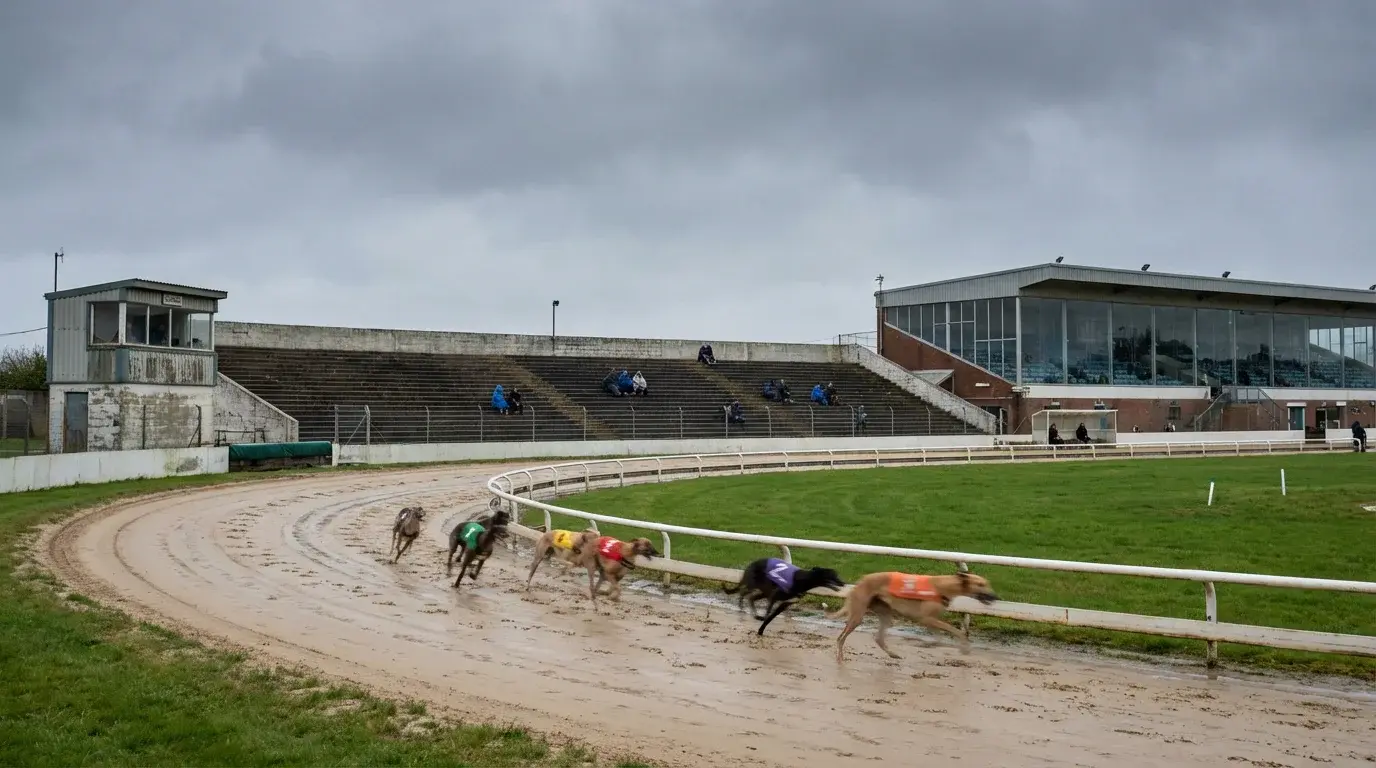
Track conditions can vary too. Afternoon racing takes place in daylight, which sounds trivial but can affect the running surface — a track that is wet from overnight rain may dry out during an afternoon meeting, producing different conditions for the first and last race on the same card. Dogs running on a changing surface may not replicate the form they showed on a consistent going. It is a minor factor but worth noting when the weather has been unsettled.
Betting on BAGS Races
Betting on BAGS races requires selectivity above all else. The volume of races — sometimes thirty or more across multiple tracks in a single afternoon — creates a temptation to bet on everything. Resist it. The sheer number of fixtures means you cannot analyse every race in the depth required to make informed selections. The bettors who profit from BAGS racing are the ones who focus on specific tracks they know well and let the rest of the card pass.
Specialisation is the most effective BAGS strategy. Pick one or two tracks from the afternoon schedule — ideally tracks you have studied before and whose grading patterns and trap biases you understand — and concentrate your analysis there. Ignore the meetings at tracks you don’t know. A deep understanding of a particular track’s D-grade fields is worth more than a shallow scan of five different tracks, because that depth is what allows you to spot value that the market has missed.
The lower-grade fields on BAGS cards can produce more variable results than higher-grade evening racing. Dogs in A6 and A7 grades are, by definition, less consistent — they are there because they haven’t demonstrated the sustained form required for the faster grades. This inconsistency cuts both ways: favourites are less reliable, but longer-priced dogs have a better chance of upsetting the market. If you are comfortable with higher variance and can identify the specific conditions where a longer-priced dog has a genuine edge — a perfect draw, a sole-seeded running line, a recent grade drop — BAGS racing can be a productive hunting ground.
Stake discipline becomes even more important with the rapid-fire schedule. A twelve-race card with ten-minute intervals gives you little recovery time between races. A losing run at BAGS pace can escalate quickly if you are betting reactively rather than selectively. Set a budget for each afternoon session, decide in advance which races you will bet on, and stick to the plan.
Daytime Dogs, Different Discipline
BAGS racing is not a lesser version of evening greyhound racing. It is a different product, with different field profiles, different market dynamics, and different demands on the bettor. Treating it as an extension of the evening schedule — applying the same methods, the same expectations, and the same stake levels — is a common mistake.
The afternoon circuit rewards patience, specialisation, and an acceptance that not every race is worth a bet. The fields are less predictable, the markets are thinner, and the pace of the fixture list can push you into decisions you haven’t fully considered. The bettors who navigate these conditions successfully do so by narrowing their focus rather than widening it — fewer tracks, fewer bets, more analysis per selection.
If you are looking to increase the number of greyhound races you bet on, BAGS racing provides the content. If you are looking to increase the quality of your betting, it provides the test. The discipline required to be selective when thirty races are available in a single afternoon is harder to maintain than the discipline required on a single eight-race evening card. Master that discipline, and the daytime circuit becomes an asset rather than a drain.